
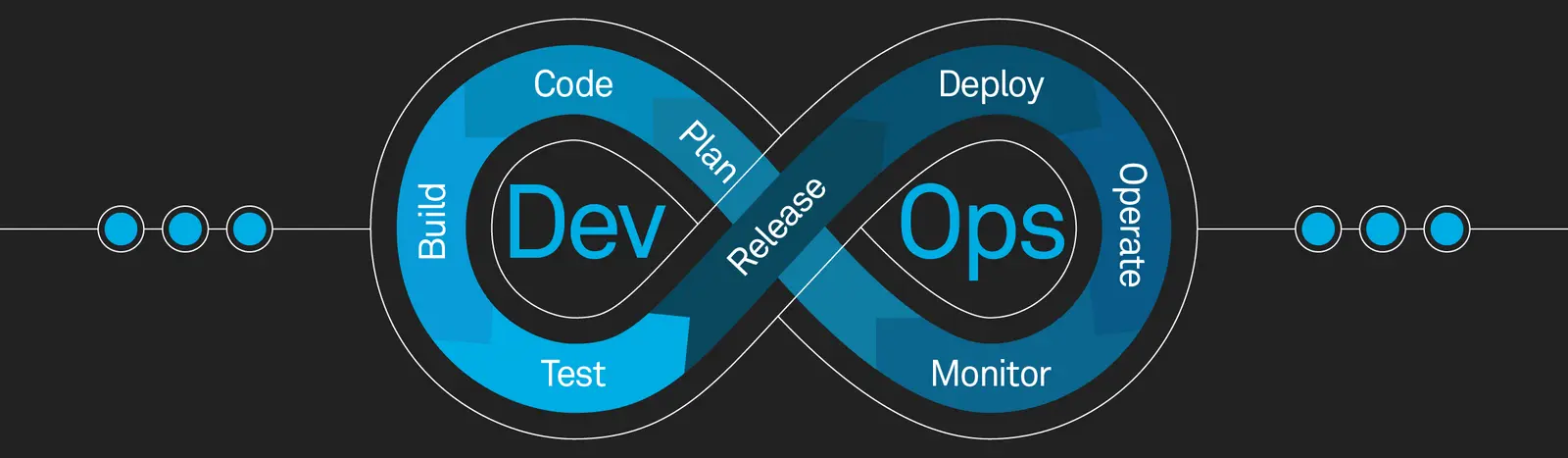
In the 1960s, automobiles manufactured in Japan consistently outperformed their competitors in the American market. Many attribute this success to lean manufacturing methodologies. The software industry borrowed similar methodologies from TPS (Toyota Production System), applying them to software development and helping bring about agile software development.
For software to deliver value, it takes more than developing software using agile methodologies. A full SDLC (software development life cycle) includes build, release, and upgrade phases, some of which are managed by different departments within an organization. DevOps extends agile methodologies across departments. DevOps has become a buzzword. Some even refer to it as a culture, but none of this is possible without automation.
Automation Pipelines
The workhorse of DevOps tooling is the automation pipeline (e.g., Jenkins, Azure DevOps, or GitHub). These pipelines expedite iterations with frequent feedback about software quality, whether in a conventional SDLC workflow or a more recent infrastructure-as-code workflow. For SDLC, the goal is to establish continuous integration (CI) and ultimately continuous deployment (CD).
Serverless Deployment
With serverless deployment, the work of managing computing resources is abstracted away. Serverless deployment models further simplify SDLCs and are ideal for common use cases such as API services, IoT, and scheduled or event-driven tasks.
DataOps
Another creative use of automation pipelines is in data pipelines. Data engineering tasks include ingestion, ETL, integration, and storage; automation pipelines are ideal tools for these tasks.
Observability
An observability setup enables instant feedback, an important part of DevOps. An observability stack consists of metrics collection, log shipping, performance monitoring, request tracing, and visualization.
More on automation
- The Leanest Web and Email Hosting - This site has been quiet for a while. During this time, I migrated the hosting platform again, and refactored email solution. This post, is another note about how I finally came to the most cost-effective web and email solution for a small business, with a solid security posture, and at…
- Debating between count and for_each in Terraform - In Terraform, we often have to create an array of resources of the same type but similar attribute values. For code reusability, manageability and for DRY principle, it's better to use loop. Terraform HCL supports loop via the use of meta-argument. Currently, there are two options to drive a loop:…
- Test Open ID Connect Flows Locally - Earlier this year, I had to integrate an application with an identity provider. Both claim to be compliant with Open ID Connect. But when they don't get along, I must find out where it breaks to determine which party isn't compliant. Therefore, I had to really get to the transaction-level…
- IAM Roles for any workload - Background A few month back a client of mine wanted to use GitLab pipeline to deploy infrastructure on AWS with Terraform. The key question is how to authenticate the Terraform process running in the pipeline to AWS with temporary credential. Having worked it out on GitHub, my proposal at time…
- Managing EC2 instances across accounts with Ansible - I regard AWS Systems Manager as omnipotent. Nonetheless, there are a few reasons that makes Ansible still a prevalent VM (EC2) management tool over Systems Manager (SSM). First, organizations already vested in their custom Ansible roles and playbooks want to reuse, and expand their assets in Ansible. The benefit is…
Contact Digi Hunch for Professional Services.